Supercharge Your Workflow : Eliminate Bottlenecks with Business Process Management Software
Published :

There are several factors that affect the business environment– inefficiencies and workflow bottlenecks can hinder productivity, delay projects, and impact overall performance. Many organizations struggle to identify these roadblocks and implement solutions that truly streamline their operations.
Identify and Eliminate Workflow Bottlenecks
Workflow bottlenecks occur when a specific process, task, or system slows down the overall workflow, leading to inefficiencies and delays. Identifying and addressing these bottlenecks is crucial for improving productivity and maintaining smooth operations.

Steps to Identify Bottlenecks
- Analyze current processes: Map the flow from end-to-end and note where tasks queue or wait.
- Gather employee feedback: Team members often see recurring pain points before leaders do.
- Use data analytics: Track cycle time, wait time, and resource utilization to find bottlenecks quantitatively.
Strategies to Eliminate Bottlenecks
- Automate repetitive tasks: Use BPM to remove manual handoffs and reduce human error.
- Redistribute workload: Rebalance tasks across teams or roles to avoid overloading a single resource.
- Implement real-time monitoring: Detect slowdowns instantly and intervene before delays cascade.
- Prioritize training: Upskill employees so they handle tasks faster and with fewer mistakes.
Key Benefits of Business Process Management

BPM software is designed to make processes visible, repeatable, and scalable. Below are the most impactful advantages.
Improved Workflow Visibility
Dashboards and tracking tools offer live insights into process health. Managers can spot trouble, reallocate resources, and keep projects on track.
Scalability and Flexibility
Modular BPM systems grow with your business and integrate with new tools and higher volumes without breaking existing flows.
Increased Efficiency
Automation reduces manual work and errors. Low-code workflow builders allow business users to create and iterate processes quickly.
Enhanced Collaboration
Centralized task management and built-in communication cut cross-team friction and speed issue resolution.
Cost Reduction
Optimized processes mean lower labor and resource costs. Predictive analytics reduce expensive mistakes.
Compliance and Risk Mitigation
Automated audit trails, approvals, and policy checks help meet regulatory requirements and reduce risk exposure.
What Features Should You Look for in a BPM Tool?
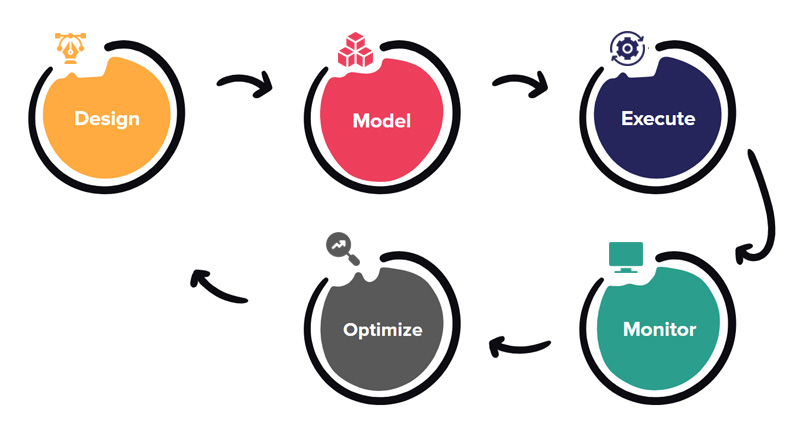
Choosing the right BPM platform matters. Look for these essential features:
- Process automation — workflows, triggers, and scheduled jobs.
- Real-time analytics — dashboards, KPIs, and exportable reports.
- Customization — low-code editors, forms, and conditional logic.
- Collaboration tools — comments, notifications, attachments, and role-based assignments.
- Integration capabilities — connectors to CRM, ERP, cloud storage, and identity providers.
How to Implement BPM Tools to Maximize Efficiency
Implementation is where BPM delivers real ROI. Use this approach:
- Start with a clear bottleneck: Solve one visible problem well before scaling to other processes.
- Measure baseline metrics: Capture cycle time and error rates so you can prove improvements.
- Automate incrementally: Replace manual steps piece-by-piece and validate outcomes.
- Train and onboard users: Adoption is key — invest in training and templates for common workflows.
- Iterate with data: Use analytics to refine rules, priorities, and resource allocation.